
TL;DR
This is where we leave the slow lane of insulin and step into the fast lane of movement. A short burst of exercise can lower glucose around six times faster than a correction bolus, often bringing you back into range within 30 minutes — and without the same risk of stacking and rebound highs.
Simple
This is the most exciting part of the foundations. If you want the full audio deep dive, this episode is the companion piece: Episode 8: Activity Snacking to Increase Time in Range for T1D.
Deep
Between meals, insulin corrections are brutally slow. As you saw in Correction insulin, it can take about three hours to get back under 10.0 mmol/L (180 mg/dL), and around four hours to get to ~5.5 mmol/L (100 mg/dL).
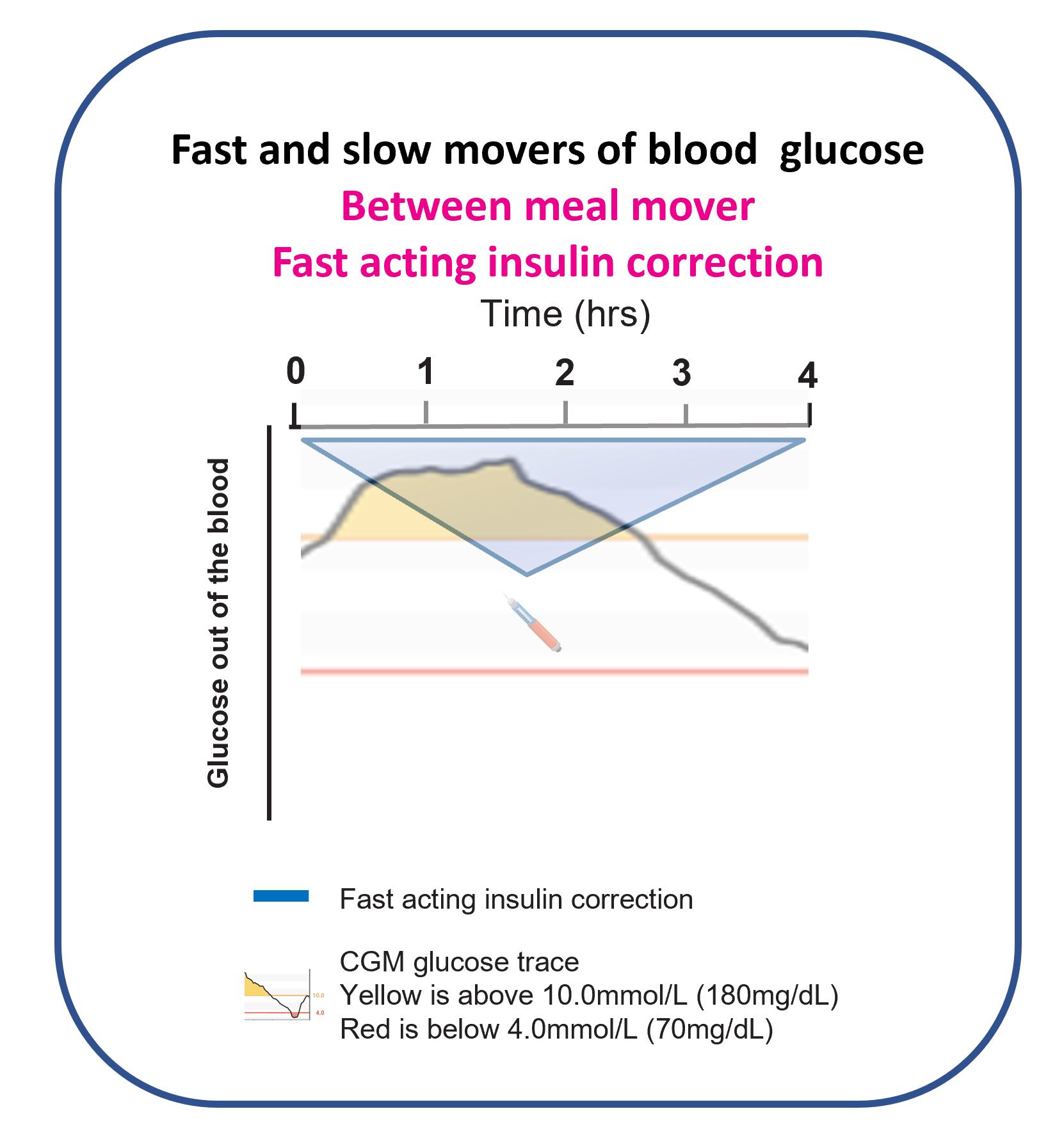
How fast is exercise compared with a correction?
Ready for it?
About six times faster.
This graphic shows that a 10-minute burst of exercise starts working immediately. By 10 minutes glucose is already dropping, and by 30 minutes you’re typically back into target.
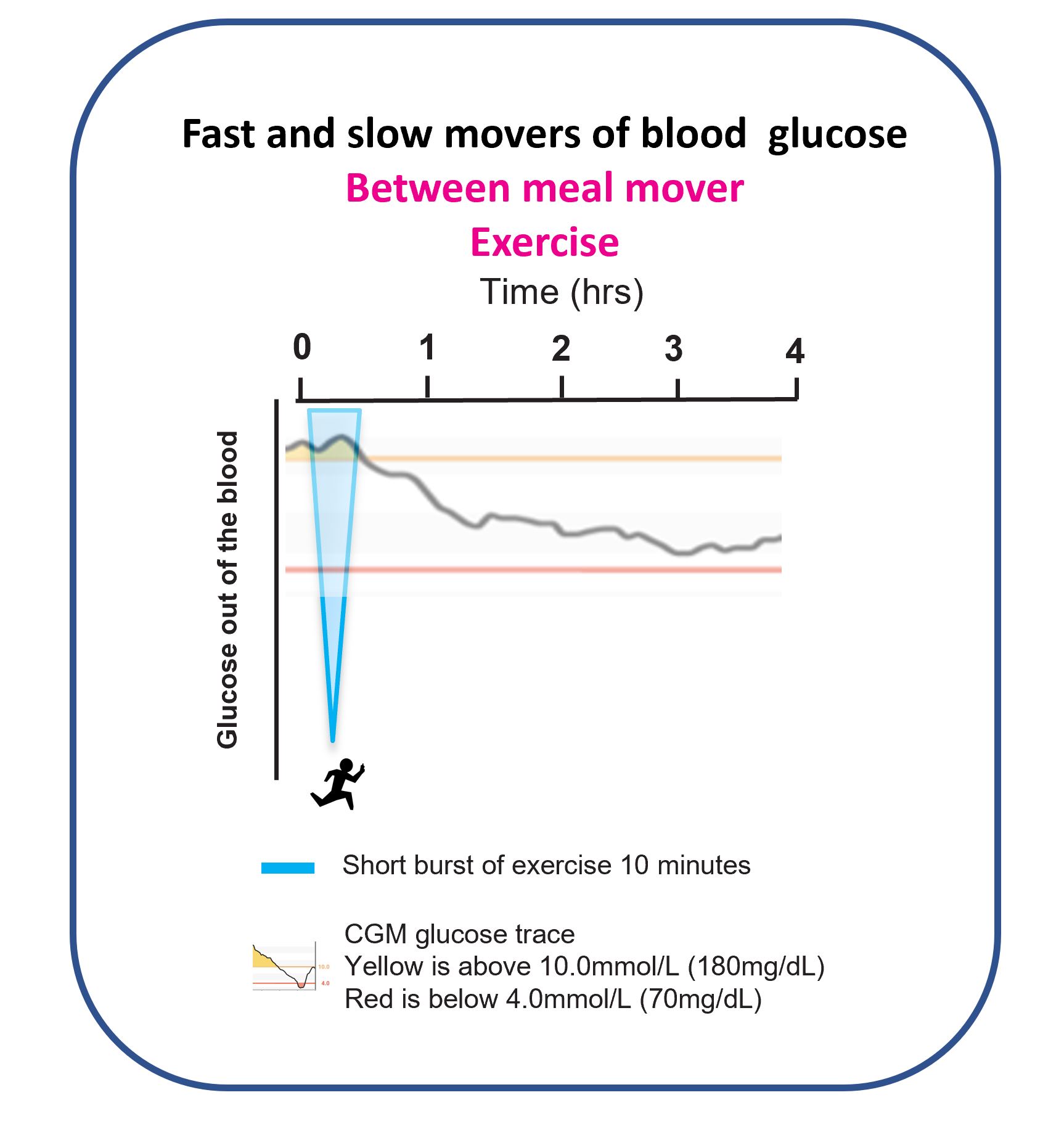
Even better: most of the glucose-lowering effect is gone by 30 minutes. That means you can repeat short bursts if needed, without the same “insulin tail” that drives late hypos.
That speed is why activity snacking is a core lever inside Dynamic Glucose Management. Once you learn when to use insulin and when to use movement, your control jumps a level.
Why does exercise drop glucose so fast?
The explanation most clinicians give is correct:
Exercise opens “side doors” into muscle and fat cells that don’t require insulin.
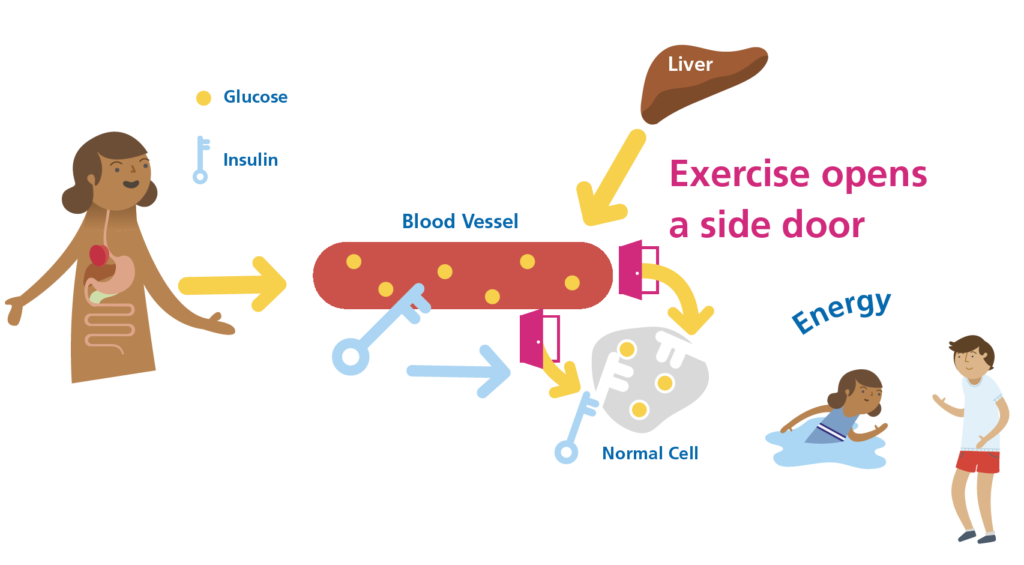
True — but not the most powerful part.
The bigger driver is blood flow. As you start exercising, blood is diverted away from digestion and towards working muscle. Heart rate rises, delivery to arms and legs increases, and insulin already in your system gets shuttled into muscles in huge amounts.
Result?
Glucose is dragged out of the bloodstream and into muscle to fuel movement. This is how exercise makes insulin feel “stronger” in real time.
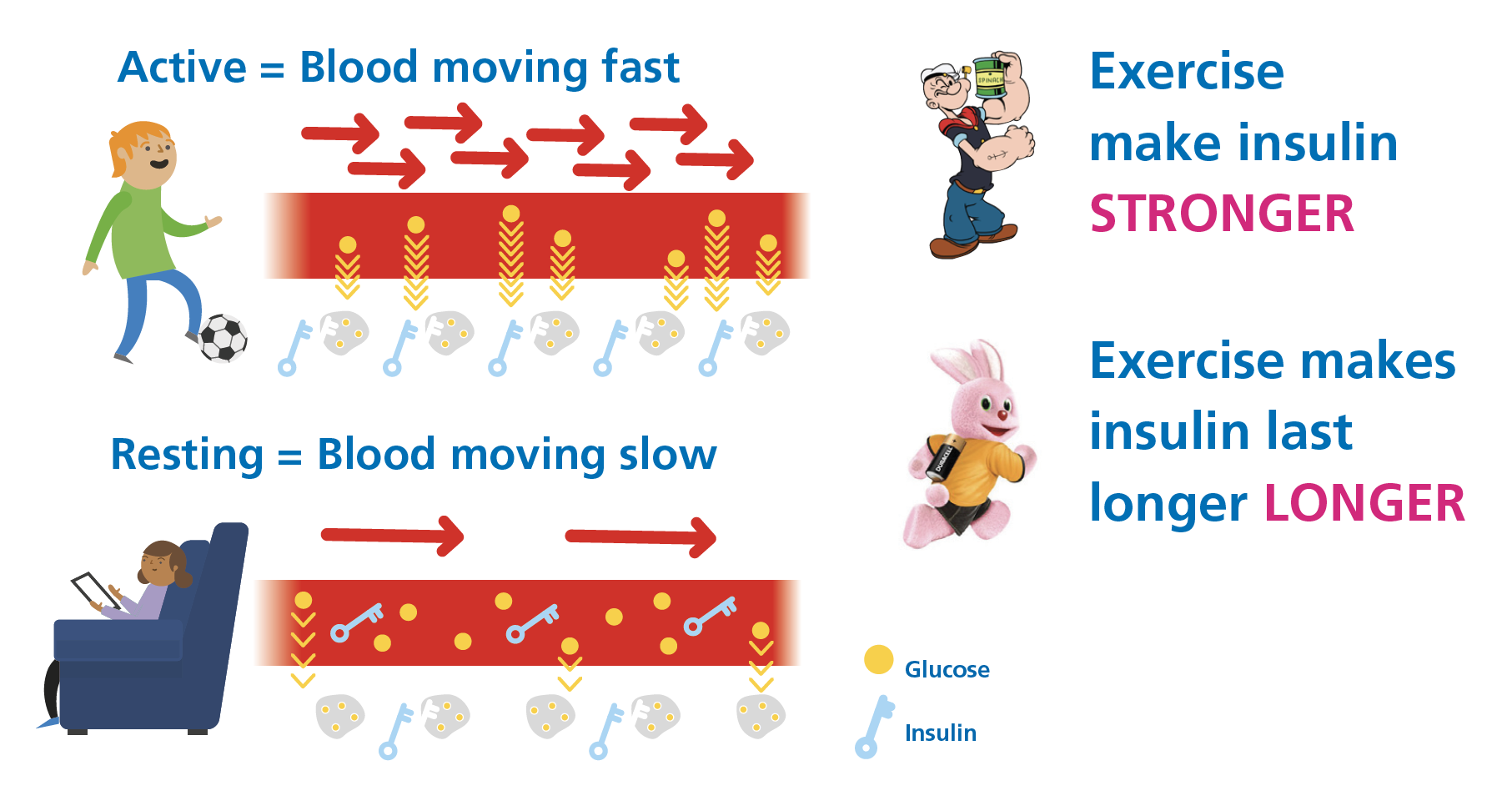
As a bonus, exercise also makes insulin last longer. Less insulin broken down per hour means you often need less total insulin across the day.
Why is needing less insulin good?
High circulating insulin is linked with greater cardiometabolic risk. Any sustainable reduction in daily insulin needs is usually a win for long-term heart and brain health. (The deeper physiology is unpacked later in the programme.)
Moderate activity vs deliberate exercise
Moderate activity (walking, gardening, casual play) is not as fast as deliberate exercise. The effect is milder and slower: often ~10–15 minutes of moderate activity takes ~30 minutes to kick in, and by an hour glucose is just nudging back into range.
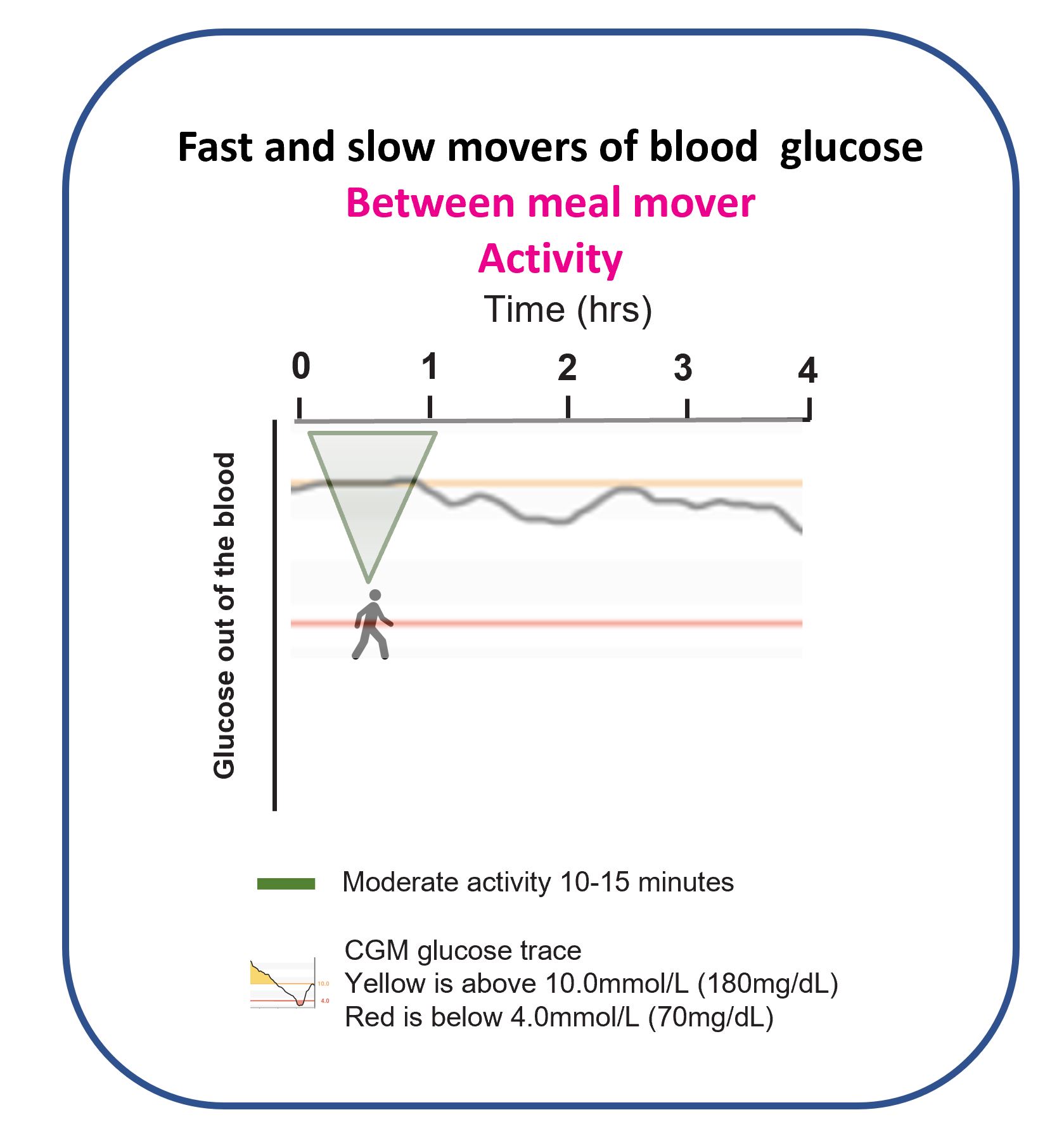
You don’t always need a sledgehammer. Sometimes a short walk is enough. Learning which tool to use is part of Dynamic Glucose Management.
Longer exercise and sport
So far we’re talking about using movement as a fast between-meal correction. But long walks, football, running, gym sessions, or anything done for fitness (not correction) need more planning. That’s why there’s a whole section on Exercise.
Two key patterns to keep in mind for later:
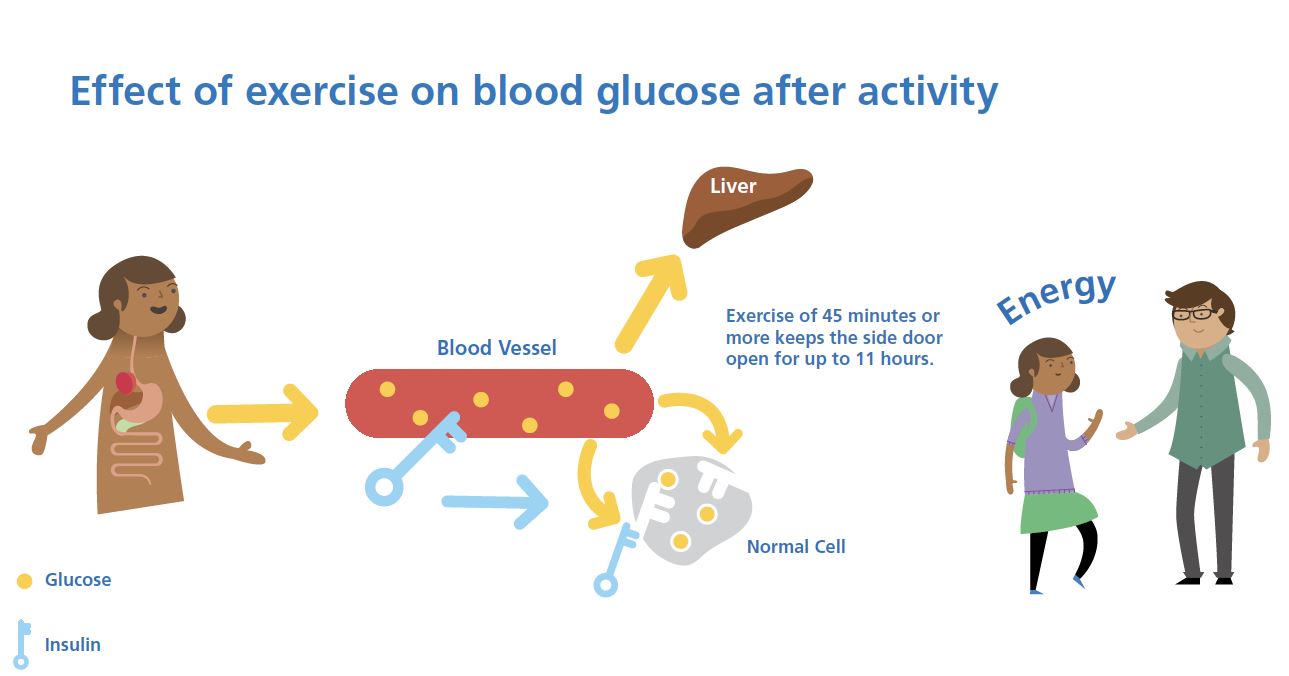
- Glucose can keep dropping long after exercise finishes, especially if the session is ~45 minutes or more.
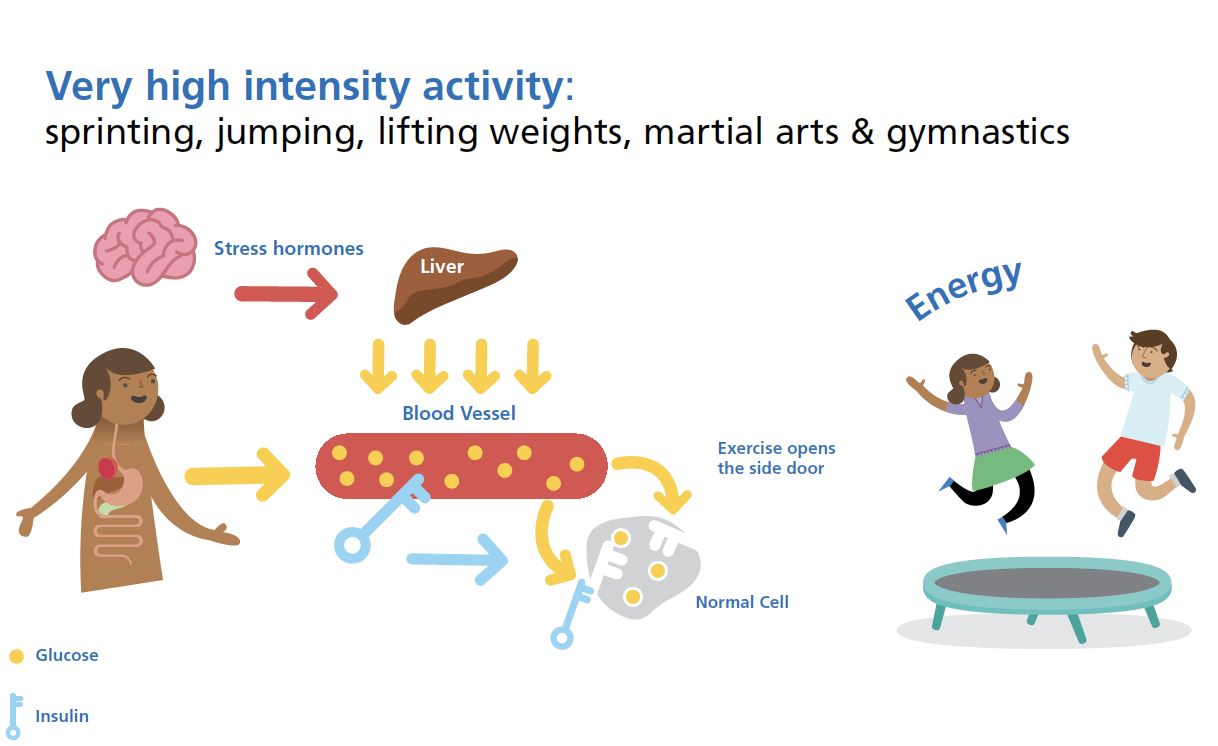
- Very high-intensity activity can spike glucose during or just after the session.
Practical
Between meals, think “movement before insulin” when glucose is mildly high and you’re safe to be active. A 10-minute burst can do what hours of insulin can’t — without stacking. Use CGM trends to guide timing and intensity.
References
What’s next
Next step: Hypoglycaemia.