
Foundations, Part 5
Correction Insulin
Correction insulin is fast-acting insulin used to bring a high glucose level back into target between meals. The maths is simple, but the physiology is not: insulin takes hours to work, so repeating corrections too soon tends to lead to stacking, hypos, and the glucose rollercoaster.
Ask Grace
Want to ask about correction factors, stacking, or whether to wait or to correct now? Ask Grace.
Video overview
This video walks through the key concepts covered on this page.
How a correction dose is calculated
To calculate a fast-acting insulin correction dose, three things are needed:
- Target glucose. A common default is approximately 5.5 mmol/L (100 mg/dL), unless the care team has set something different.
- Correction factor (insulin sensitivity factor). How much 1 unit of insulin tends to lower glucose.
- Current glucose level.
Correction factors vary by time of day for the same reasons carb ratios do: insulin sensitivity changes with activity, fitness, and circadian rhythm.
Example correction factors:
- Breakfast: 1u : 3.0 mmol/L (approximately 54 mg/dL)
- Lunch: 1u : 4.0 mmol/L (approximately 72 mg/dL)
- Evening meal: 1u : 3.5 mmol/L (approximately 63 mg/dL)
The formula:
(Current glucose – target glucose) / correction factor = correction units
Example calculation:
- mmol/L: (11.0 – 5.5) / 3.0 = 1.8 units
- mg/dL: (200 – 100) / 54 = 1.8 units
Important framing: the 1.8-unit figure above is a population-average estimate at this correction factor. People have their own correction factors set with their diabetes care team, calibrated to their TDD, glycaemic history, age, hormones, and activity patterns. Apply your own correction factor to your current glucose and your personal target to compute the dose that fits you. If you do not know your correction factor, do not use this figure; speak to your team.
Why “fast-acting” still feels slow
This graphic shows what tends to happen after a 1.8-unit correction:
- Approximately 3 hours to return below 10.0 mmol/L (180 mg/dL)
- Approximately 4 hours to reach around 5.5 mmol/L (100 mg/dL)
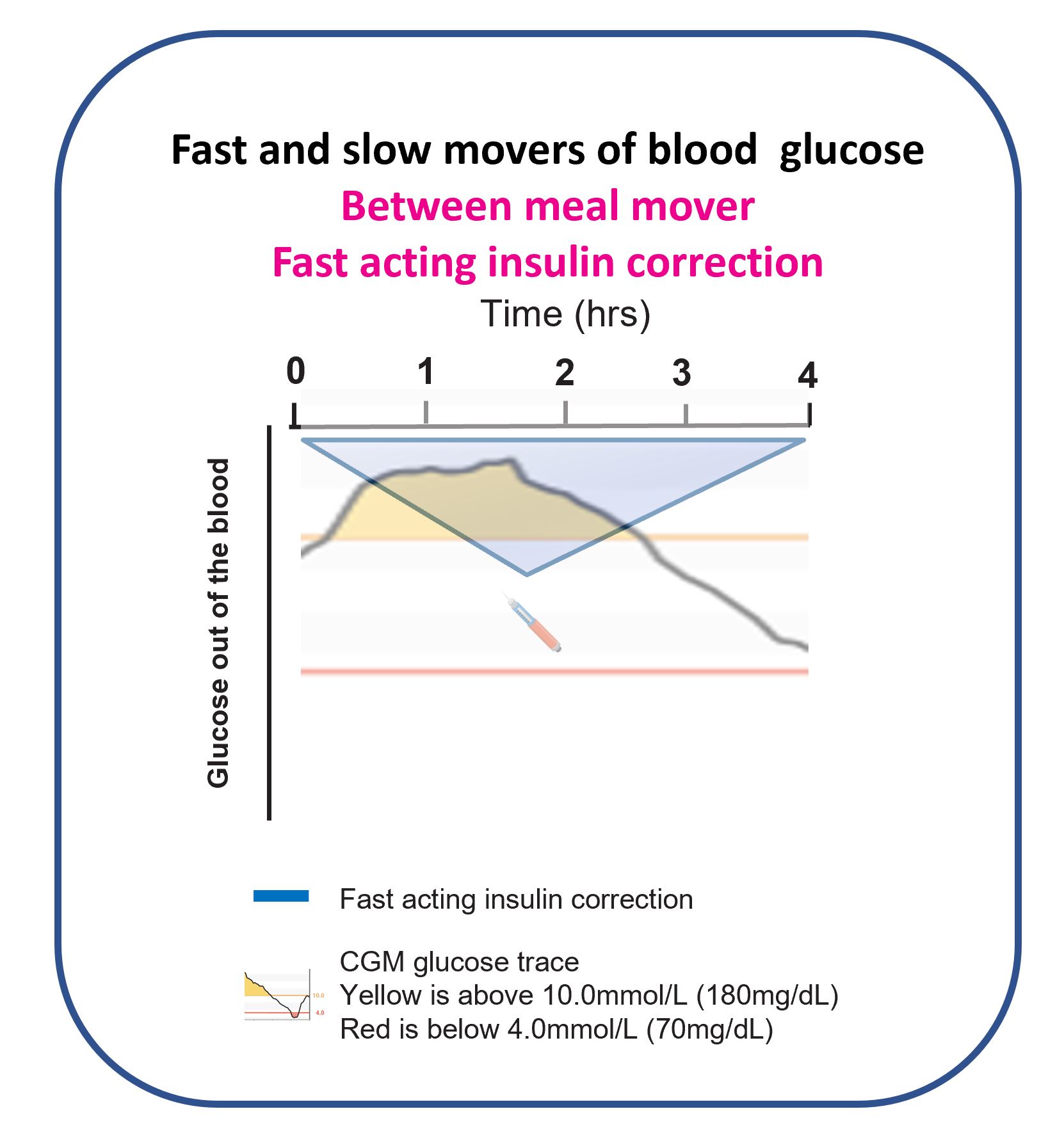
The mechanism: fast-acting insulin analogues have an onset of around 15 minutes, but their peak effect is between 60 and 90 minutes, and their tail extends to 4 or even 5 hours. Glucose does not drop noticeably for the first 30 to 60 minutes, which is where impatience tends to cause problems.
The trap: insulin stacking
The classic mistake is repeating a correction too soon because glucose has not moved yet. The result: insulin piles up. Two hours later, glucose drops hard. That is insulin stacking.
Real-world CGM traces show this pattern clearly: an early second correction creates a delayed hypo, followed by defensive eating and a rebound high, producing the glucose rollercoaster.
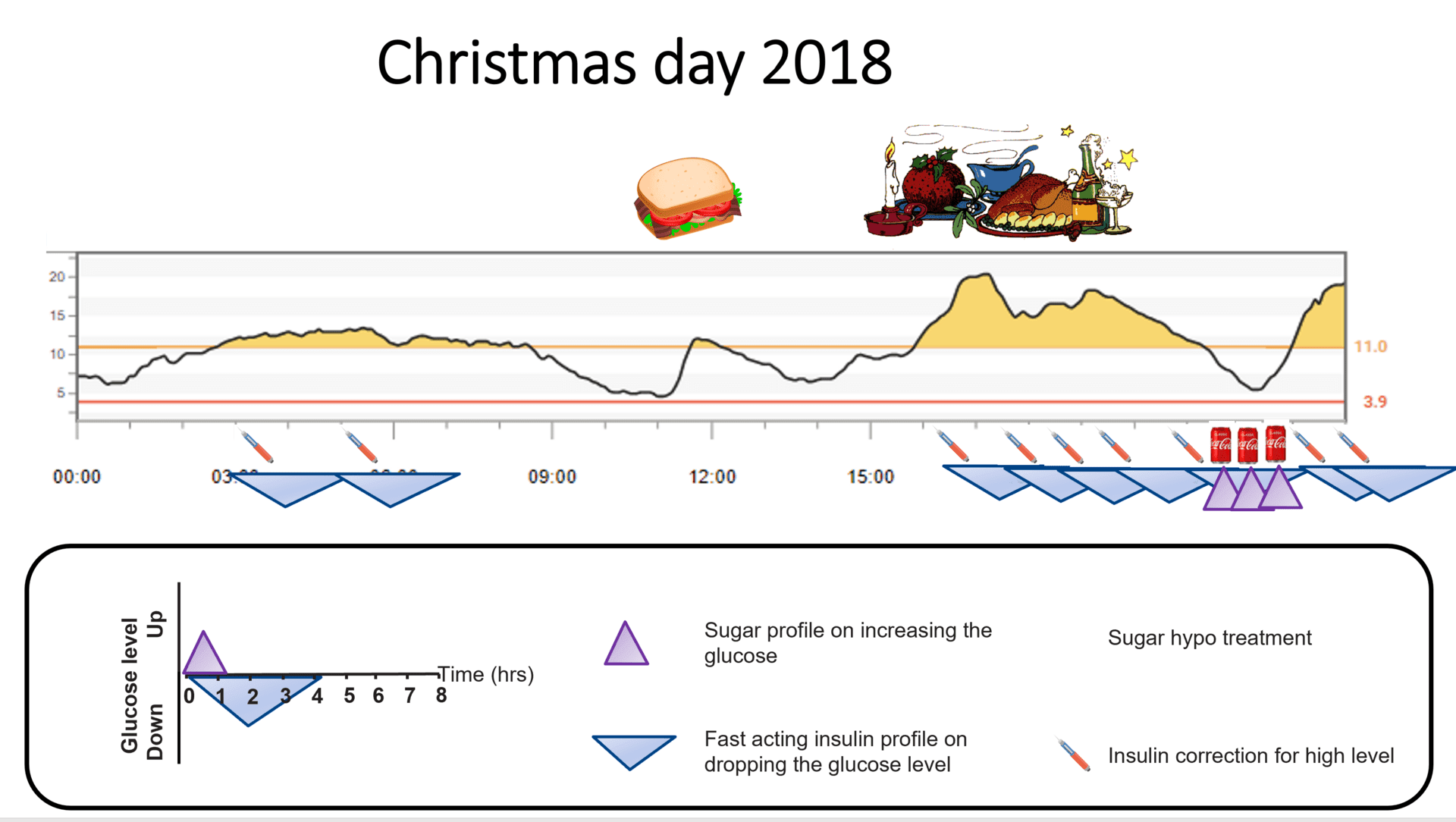
Many people find that the key insight here is patience: avoid judging a correction until the insulin has had time to work. CGM trend arrows tend to give a much better signal than the absolute number in the first hour or two after dosing.
A faster lever than more insulin
For those who want glucose to fall faster between meals, additional insulin is not always the best tool. Physical activity, even a short walk, tends to lower glucose within approximately 30 minutes rather than the hours that extra insulin requires. This holds where ketones are not raised. Ketones signal that the body is short of insulin, and activity in that state tends to push glucose higher rather than lower. At or above 3.0 mmol/L blood ketones the pathway shifts to a DKA-risk response and the care team or emergency services need to be involved; the ketones page covers what the different levels mean. This is explored in more detail on the activity and exercise page.
The mechanism to carry forward
The correction formula itself is straightforward, and many people find that the real challenge is not the maths but the waiting. Fast-acting insulin takes 3 to 4 hours to do its full work. Repeating a correction before that window has passed tends to stack insulin and create the rollercoaster pattern. Trend arrows on a CGM tend to be a more useful guide than impatience. This is worth exploring with your care team, especially around correction factors at different times of day.
This content is for educational exploration only. It describes average responses and general principles. It is not medical advice and cannot replace individual clinical guidance from your diabetes care team.
Correction Insulin Knowledge Check
You have read why a correction rewards patience over quick maths. A short assessment checks the idea has stuck, and 9 out of 10 earns your certificate.
Part 5 of 12
Correction Insulin