
Foundations, Part 11
Fast and Slow Movers
Between meals, glucose can be nudged up or down by different tools and factors. Some act in minutes. Others take hours. Understanding the difference is the conceptual foundation for Dynamic Glucose Management.
Ask Grace
Curious which foods move your glucose fast and which take hours? Ask Grace.
Watch or read
There is a video that covers this material, or read on below:
Why this concept matters
Between meals, glucose can be nudged up or down by different tools. Some act fast, in minutes. Others are frustratingly slow, taking hours to have a meaningful effect.
Prioritising the fast movers between meals tends to produce better time in range, fewer glucose rollercoasters, and far less mental load. This is the overarching concept behind Dynamic Glucose Management.
When slow, blunt tools are replaced with fast, more precise ones, time in range (3.9 to 10.0 mmol/L, or 70 to 180 mg/dL) can improve substantially. Moving away from slow movers also changes the experience of managing between-meal glucose, no more giving a correction and watching nothing happen for an hour, or treating a hypo and waiting for the rebound.
Learning why fast movers tend to outperform slow movers between meals is central to managing type 1 diabetes well.
The benefits have only become clearly visible with widespread CGM use and real-world pattern data. Structured education tends to lag what people with skin in the game already know works.
The summary graphics
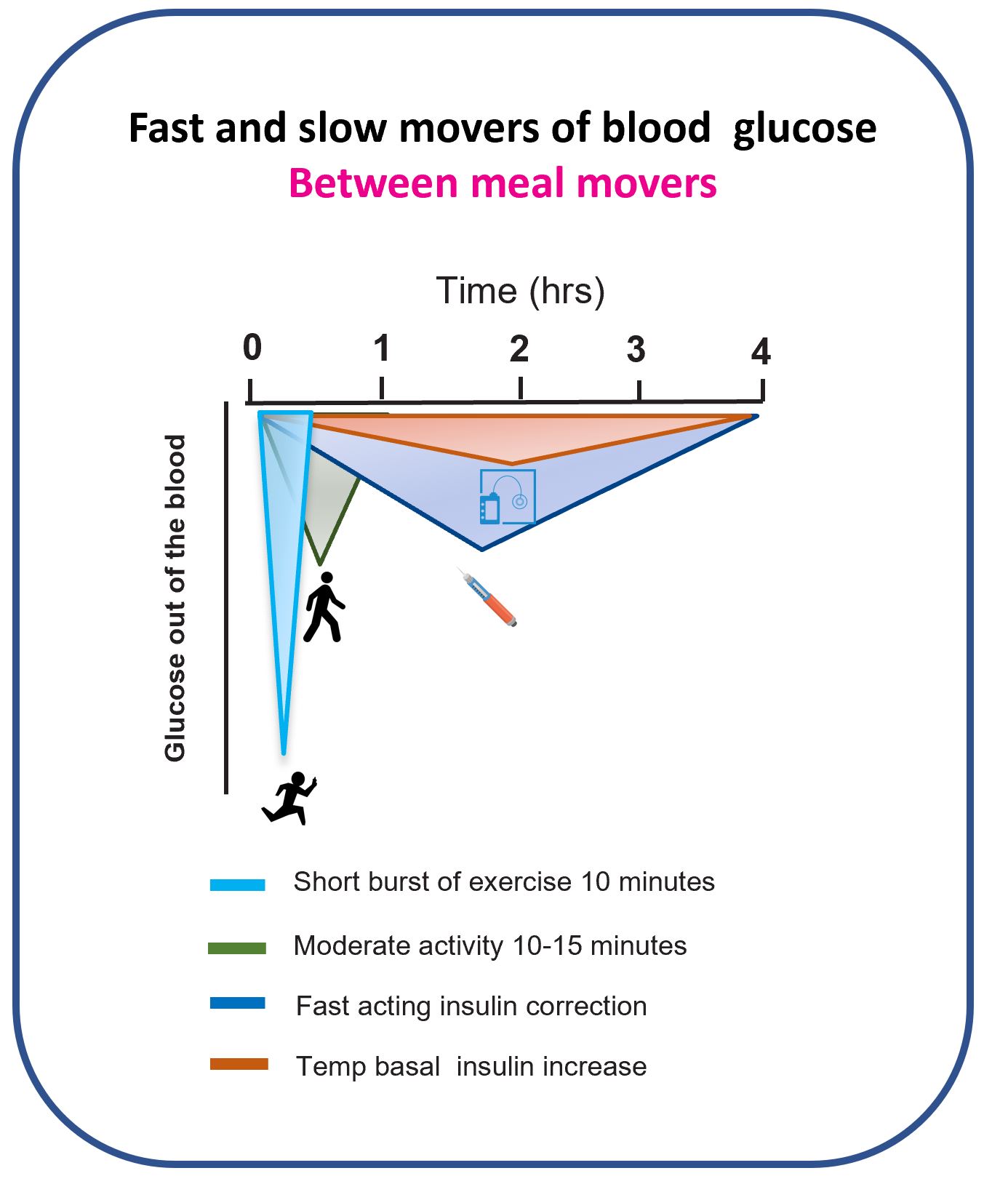
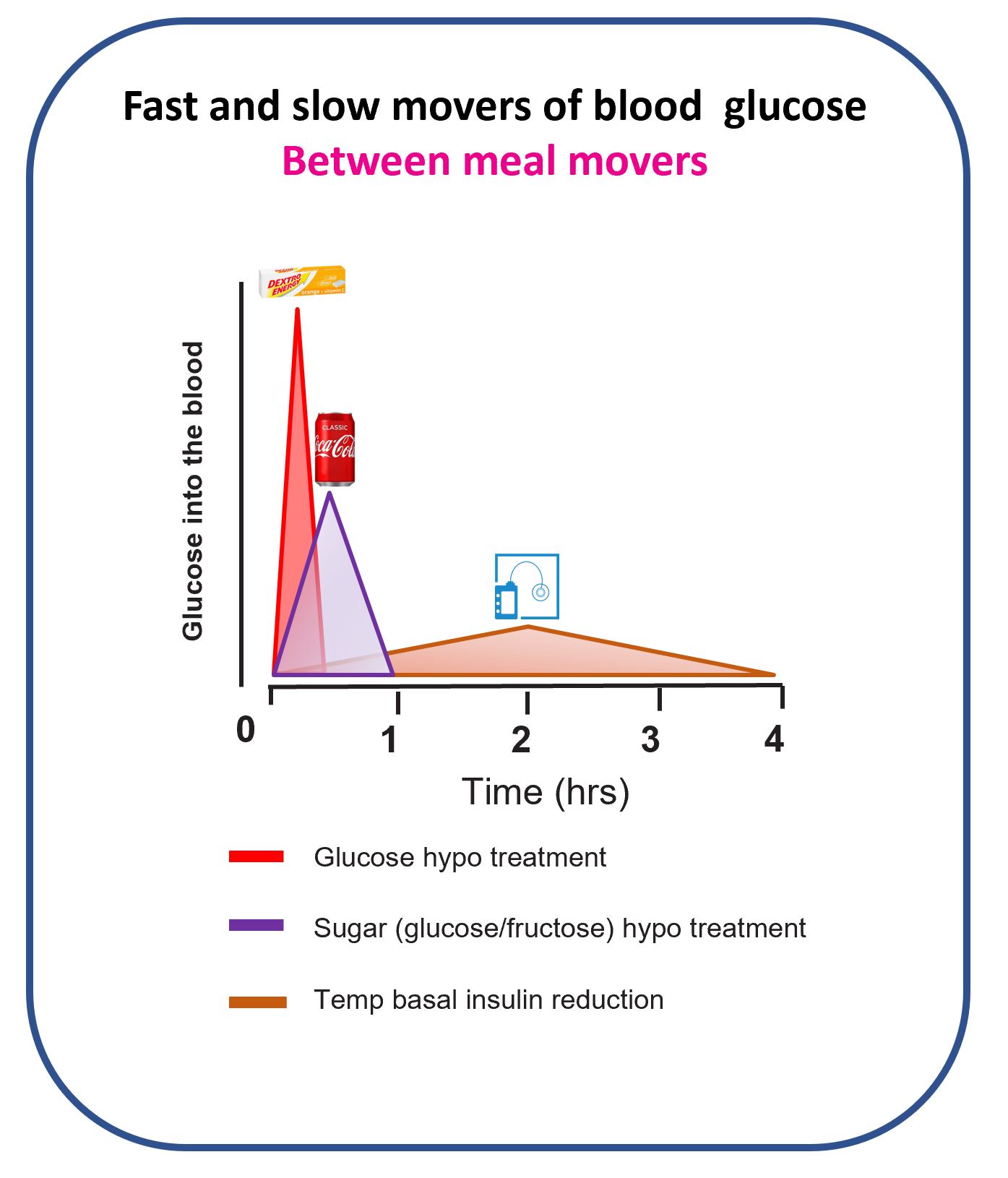
These diagrams bring together what the Foundations guide has covered so far.
Fast and slow movers that reduce glucose between meals
Fast and slow factors that raise glucose between meals
Putting them together
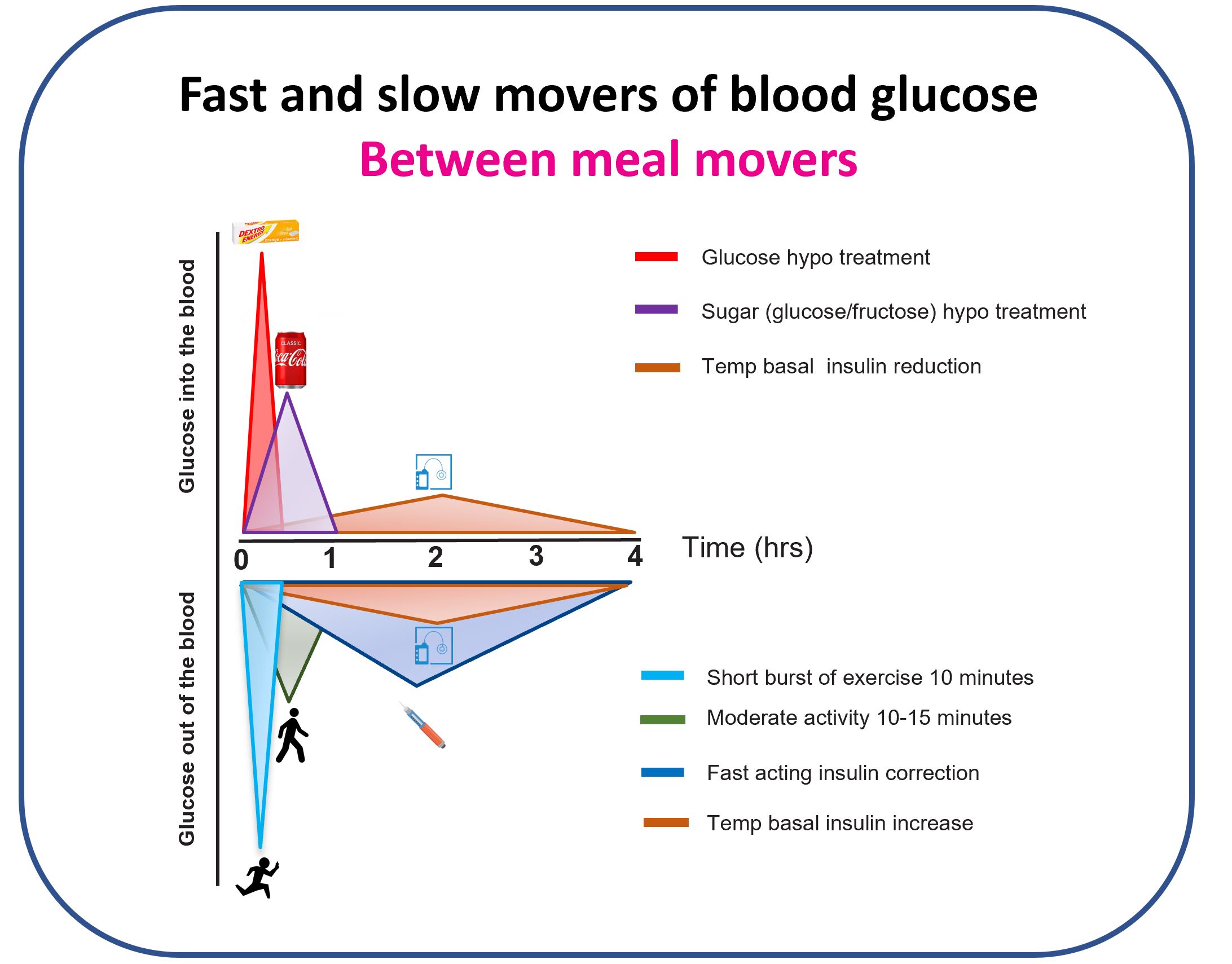
Understanding these diagrams thoroughly provides the mental model for Dynamic Glucose Management. They are worth returning to often.
This content is for educational exploration only. It describes average responses and general principles. It is not medical advice and cannot replace individual clinical guidance from your diabetes care team.
Fast and Slow Movers Knowledge Check
You have read how to nudge glucose between meals without the rollercoaster. A short assessment checks the fast and slow movers have landed, and 9 out of 10 earns your certificate.
Part 11 of 12
Fast and Slow Movers